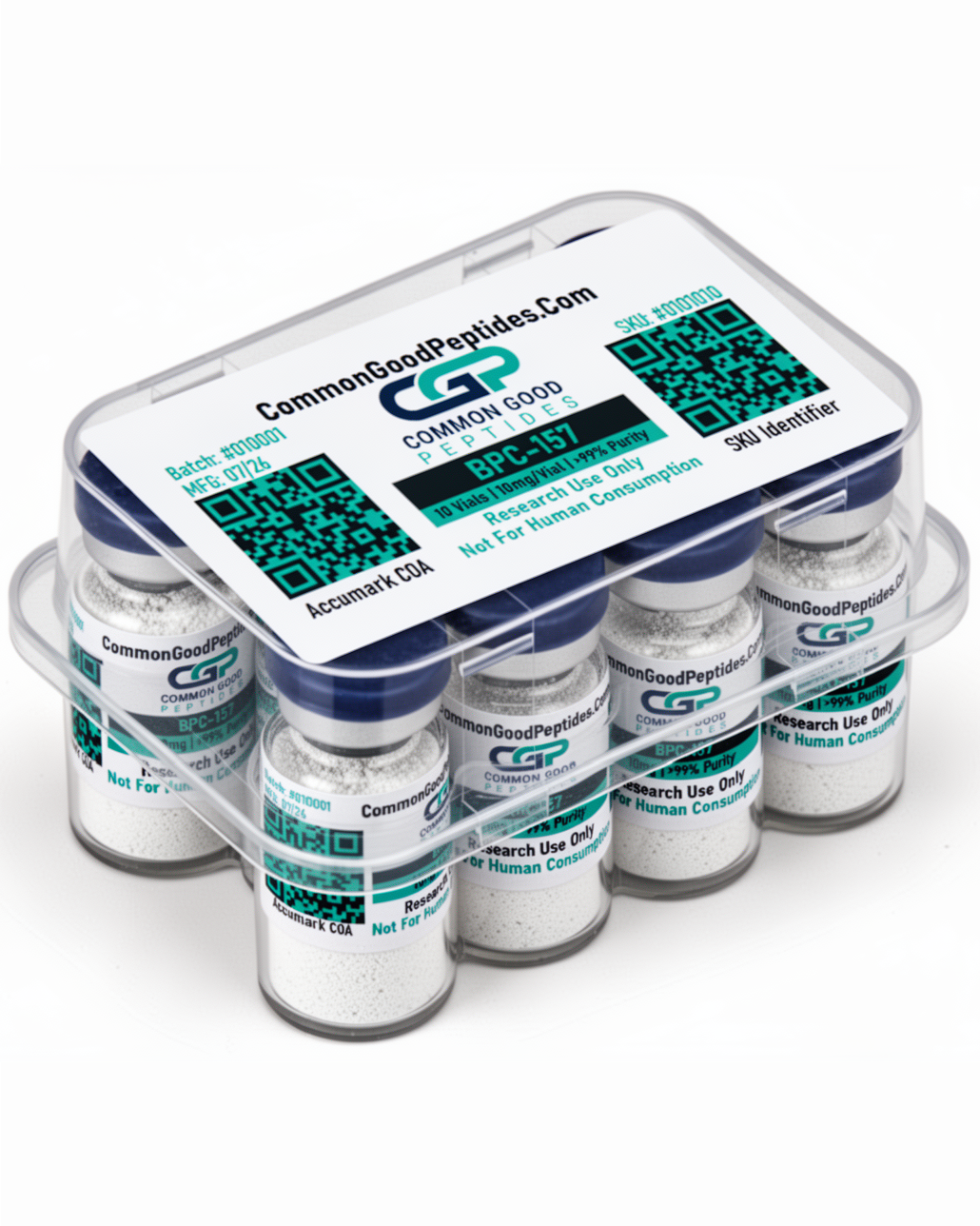
BPC-157 (10mg)
Research-Grade Peptide 99%+Purity COA Certified
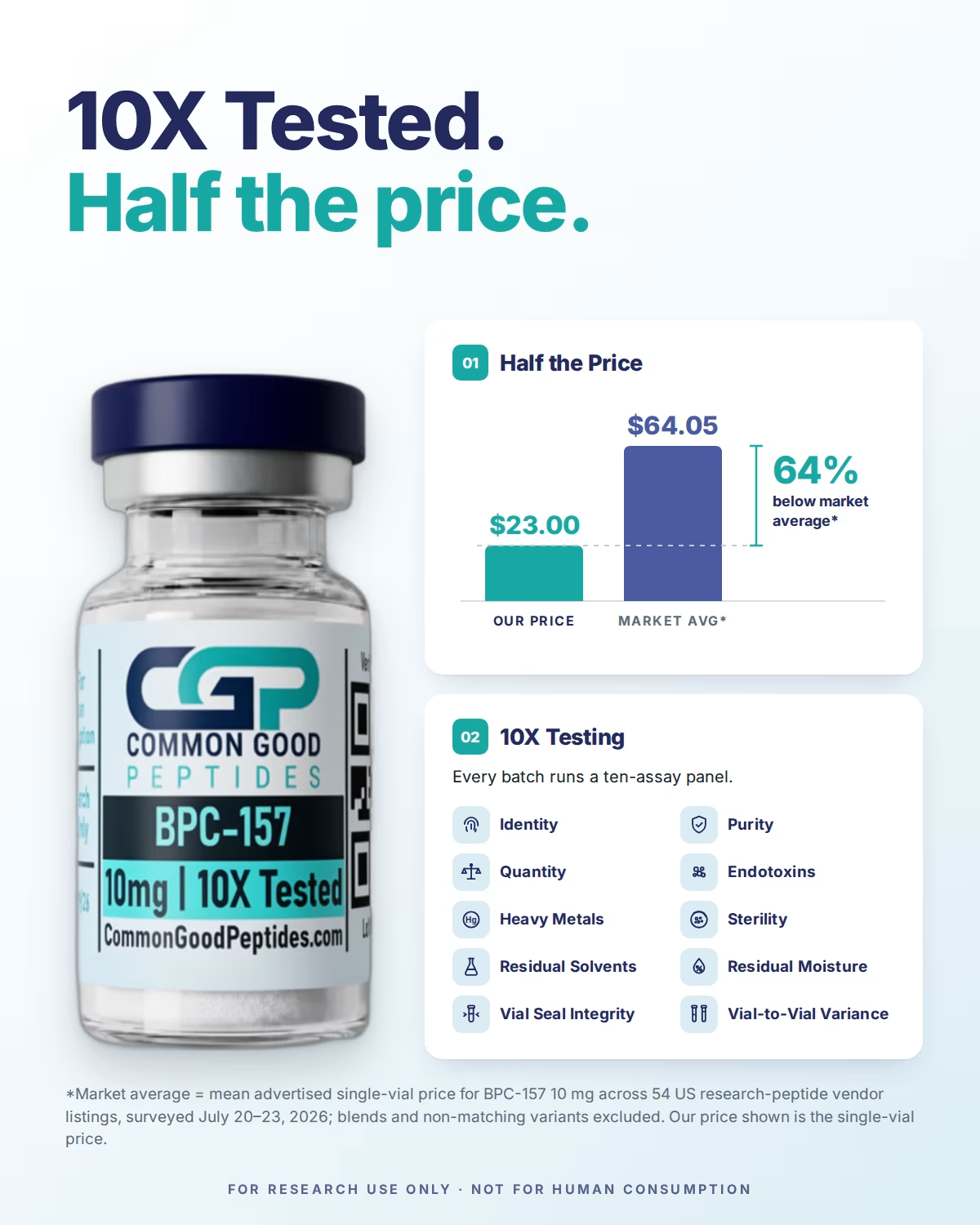
Market average $64.25 / vial — mean per-vial price for BPC-157 across verified RUO vendors, pack pricing normalized to single-vial equivalents, vendors without a published COA excluded. Sample size and date to be confirmed before launch; the figure must be re-sampled on a schedule.
Add 2 more vials → $27.60/vial, 57% below market.
Your next 2 vials at $27.60 each — only $48.30 more takes the order to $82.80.
Orders before 2PM EST ship same day. Tracking delivery in 2-3 days.
Download the full COA for this batch. View all COAs →
BPC-157 BPC-157 - Core
BPC-157 - Core
Our Commitment to Research Integrity
We supply peptide preparations for in-vitro laboratory research and experimental modeling only. Your results are only as good as the material you start with. So we test every lot before it ships — not now and then, and not by taking a supplier’s word for it.
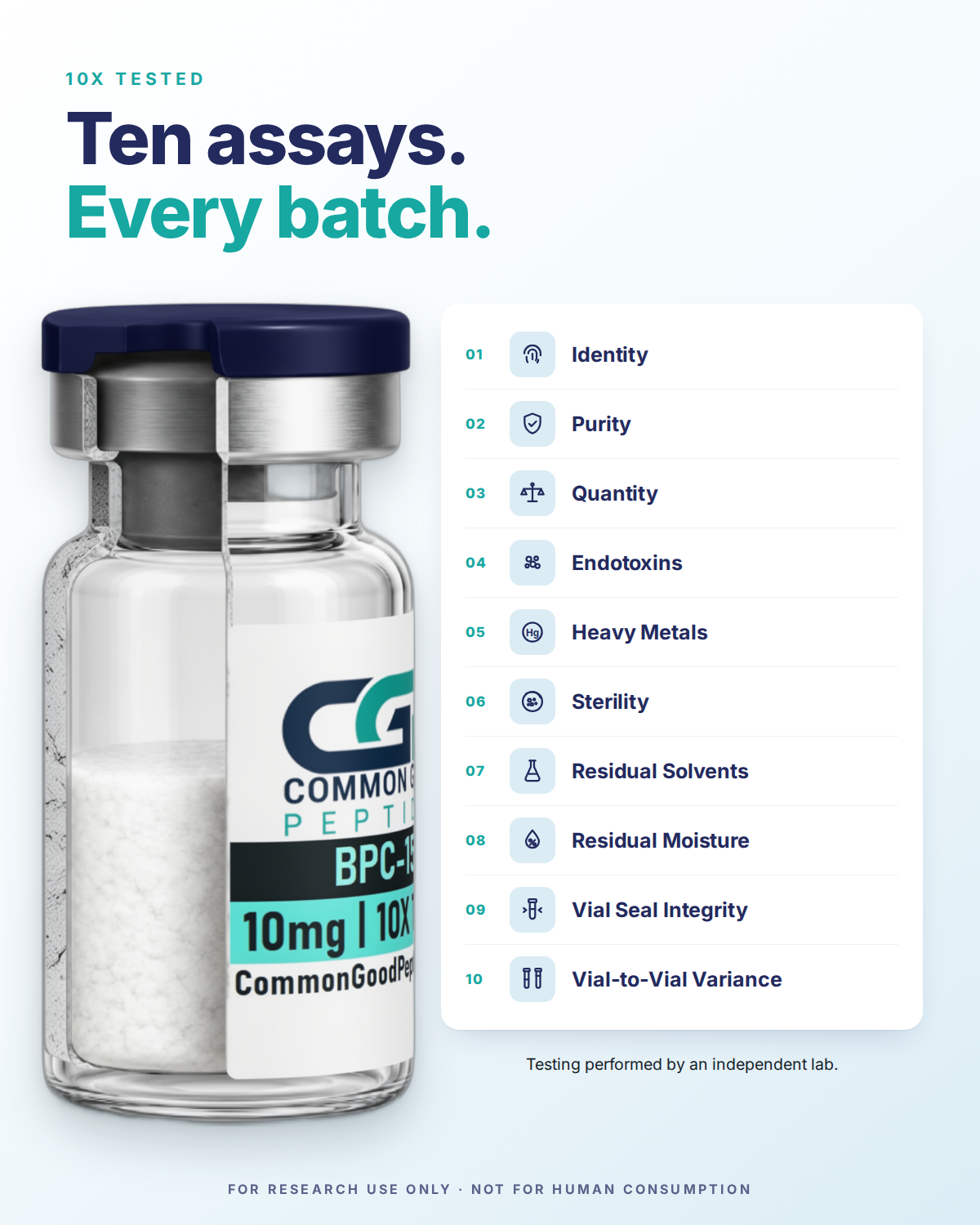
Our ten-point framework answers four questions: what the compound is, how much is there, what else is in the vial, and whether the vial kept it that way.
What’s In The Vial
- Identity — HPLC confirms the peptide is the sequence on the label. It’s the first thing any experiment depends on.
- Quantity — We verify how many milligrams of actual peptide are in each vial. Fill weight isn’t peptide content — freeze-dried material also holds salt and water. We report the number that sets your working concentration, not the one that looks bigger.
- Vial-to-Vial Variance — We pull vials from across the fill run and test them separately. A lot average doesn’t tell you what’s in the specific vial on your bench. This confirms the number on the certificate applies to all of them.
- Purity — Testing separates the peptide from everything that came along with it: incomplete sequences, oxidized forms, clumped material, and leftovers from synthesis. Reported as a percentage.
What Shouldn’t Be In The Vial
- Endotoxin — Screens for the heat-stable residue left behind by Gram-negative bacteria. It survives the processes that kill the bacteria themselves, so a vial can have no living organisms in it and still throw off cell-based work.
- Heavy Metals — Screens for metal contamination, including residue from the synthesis process. Trace amounts interfere with enzyme and cell-culture systems long before you’d ever see them.
- Sterility — Rapid microbial detection confirms nothing is growing in the vial. It’s a separate test with its own pass mark — never assumed from other results.
- Residual Solvent — Measures the solvents left over from making and purifying the peptide, against accepted limits. You can’t see them, and they react.
- Residual Moisture — Measures how much water is in the freeze-dried cake. Water breaks peptides down and causes clumping in storage, and it quietly changes the weight-to-peptide ratio you’re calculating from.
Vial Integrity
- Vial Seal Integrity — We confirm the stopper and crimp held their seal and their vacuum. A perfect peptide in a failed vial is no longer a perfect peptide.
Results You Can Verify Yourself
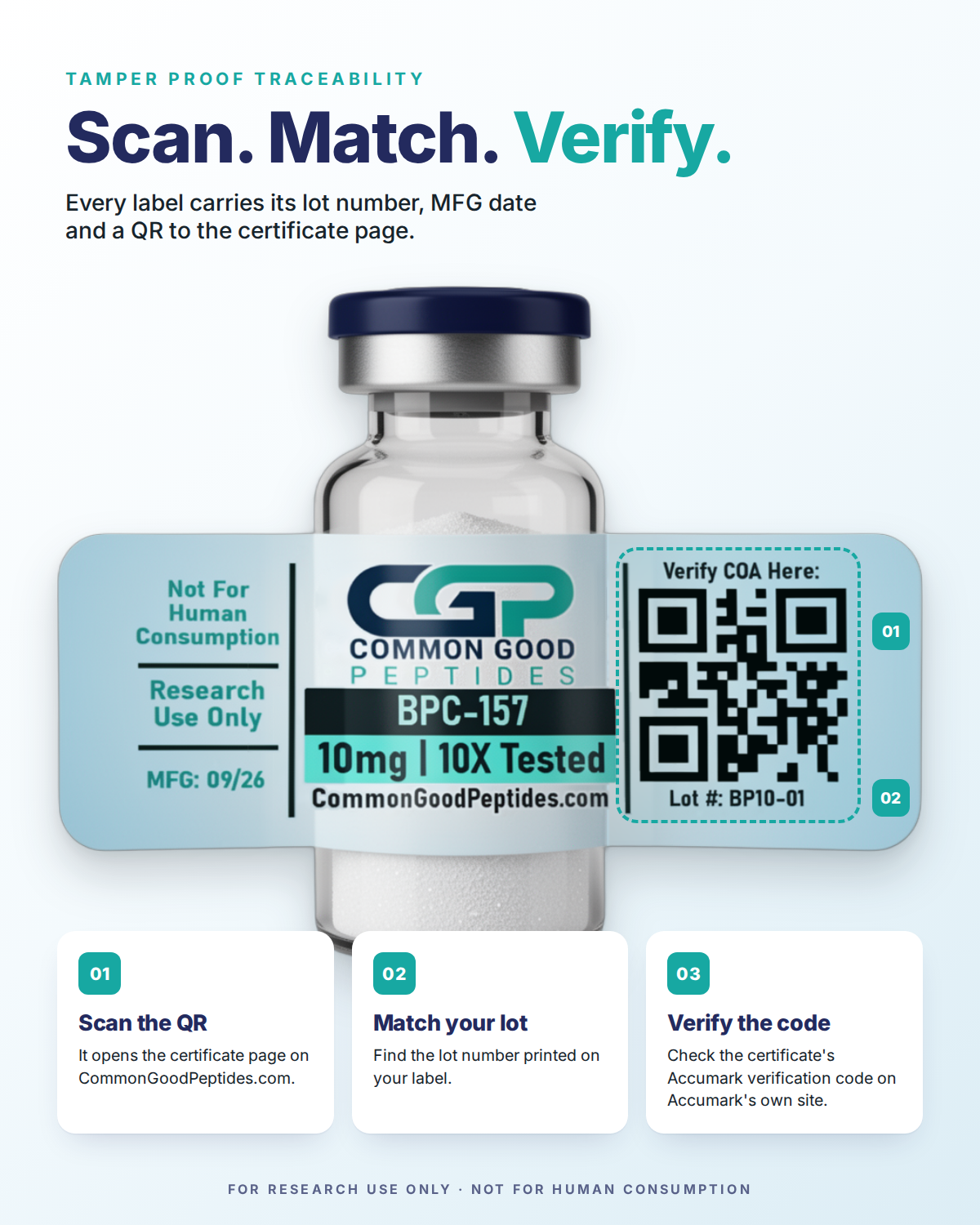
Every lot ships with a digital Certificate of Analysis — but not one we typed up. Our COAs are tamper-proof and hosted by the independent lab that ran the tests, on their system, under their control. We can’t edit them, and neither can anyone else. You’re reading the lab’s results directly, not our summary of them.
The Full Picture
The first four tests tell you what you have and how much. The next five tell you what else is in there. The last one checks the seal. Together they close the gaps a shorter panel leaves open — and our published COAs are tamper-proof.
Description
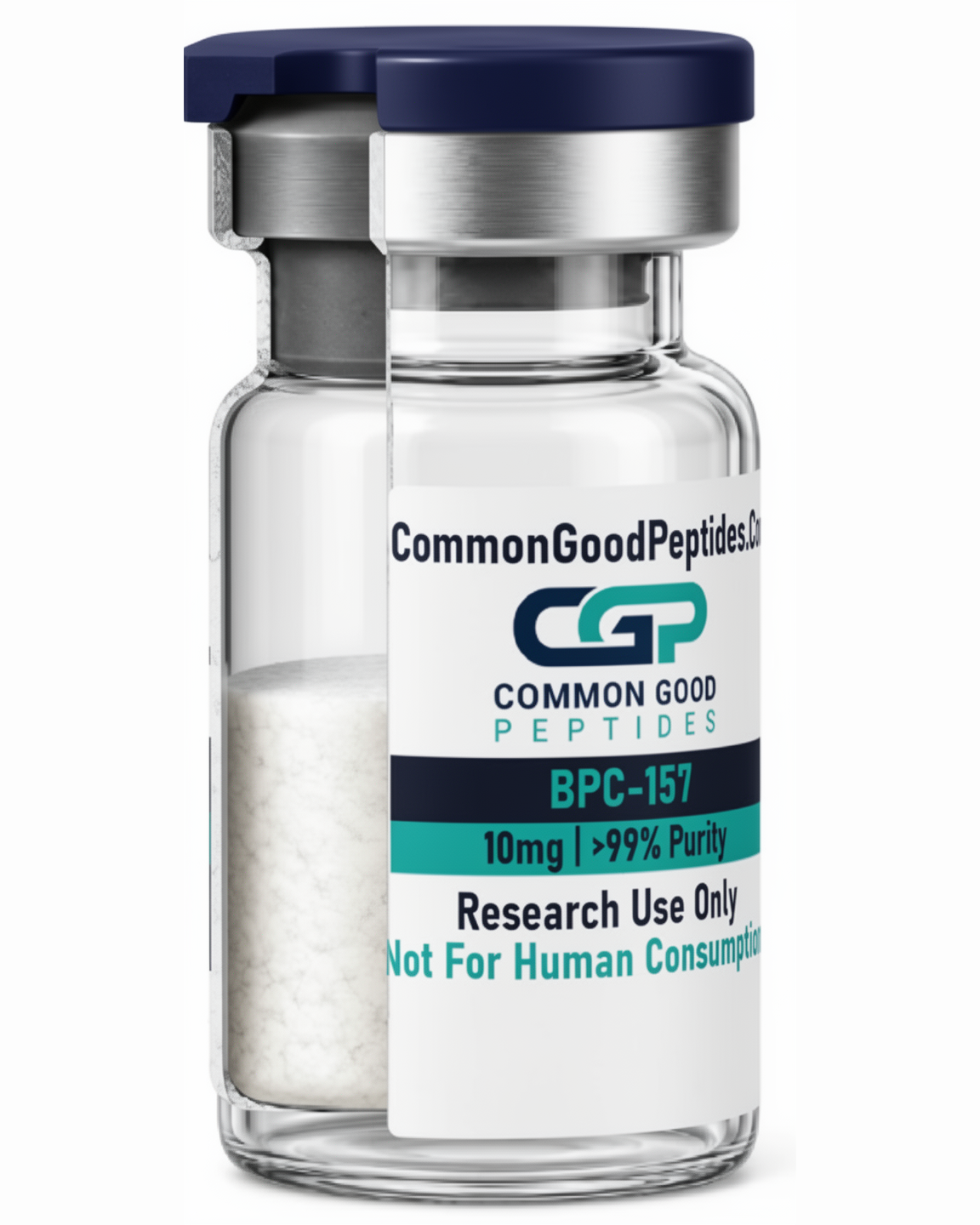
BPC-157 is a high-purity peptide offered in a 10mg lyophilized powder format, intended strictly for laboratory research and development purposes. Manufactured to exceed 99% purity and tested using both HPLC and LC-MS protocols, this peptide is supplied in a sterile, sealed vial to ensure stability and integrity.
Related products
-
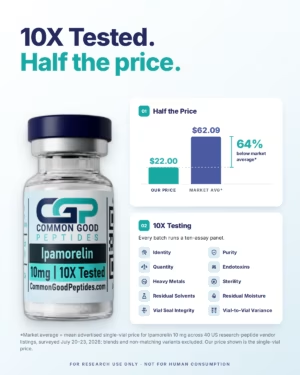
Ipamorelin (10mg)
▼ 63% below market average
OUR PRICEfrom $22.00*Market average$59.13*Based on average competitor pricing.
-
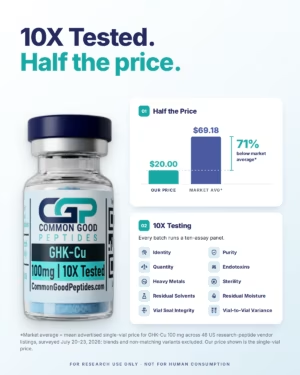
GHK-CU (100mg)
▼ 71% below market average
OUR PRICEfrom $20.00*Market average$69.18*Based on average competitor pricing.
-

CJC No DAC (10mg)
▼ 59% below market average
OUR PRICEfrom $20.00*Market average$49.06*Based on average competitor pricing.
-
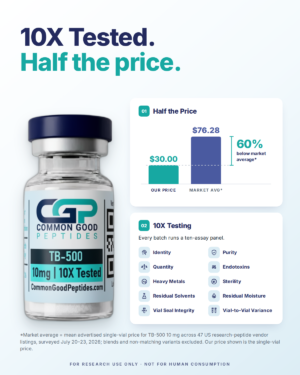
TB-500 (10mg)
▼ 61% below market average
OUR PRICEfrom $30.00*Market average$77.6*Based on average competitor pricing.
Reviews
There are no reviews yet.